


Karlanea Brown | RDM Aquaculture LLC
County: Benton County, Indiana
Years farming: 15 years shrimp/40 years corn and soy
Farm size: 12000 sq feet shrimp /200 acres corn/soy
Primary products: row crops, agritourism, salt water shrimp/L. Vannami
Production approach: recirculation indoor shrimp farming
Conservation practices in use: water recycling

From Fashion to Fish Tanks: An Unexpected Path to Agriculture
Karlanea Brown never planned to be a farmer. With a degree in fashion and dreams of moving to New York City, agriculture was not part of the plan. After marrying into a farm family, she found herself surrounded by a way of life she did not yet understand. “I thought I could move a hog farm to New York City,” she said with a laugh. Early attempts to help on the farm were memorable for all the wrong reasons, eventually leading to a lighthearted but firm ban from operating equipment. For years, she built a career off the farm, but when shifting markets forced the family to rethink their operation, a new opportunity emerged in aquaculture. “All I was going to do was come out and dip shrimp,” she said. Instead, she stepped into a role that would grow into a full-time passion. Today, she leads RDM Aquaculture LLC and has spent more than 15 years building something of her own.
At her farm in Benton County, Karlanea raises saltwater shrimp in indoor tanks, an uncommon form of agriculture in Indiana. When they first got started, there were very few shrimp farms in the United States and even fewer willing to share information. “We were the third, and nobody wanted to talk to us,” she said. With little guidance and a consultant who had never actually raised shrimp, the learning curve was steep. They lost nearly a million shrimp in each of their first two years. “Trial and error was our teacher,” she said. Instead of walking away, Karlanea began testing, adjusting, and ultimately rethinking the system entirely. What they developed was a simplified approach that relies on air and naturally occurring bacteria rather than pumps and filters. “We let the bacteria do the work for us,” she explained. The result is a no discharge system where the water has remained in use for more than 15 years. What started as a necessity became an innovative, sustainable, and award winning model.
Karlanea approaches her work with a level of care and attention that she believes is essential to success. “My goal is to make sure their water is perfect every single day,” she said. While she does not frame her experience around being a woman in agriculture, she recognizes that perspective plays a role. “I think women are more in tune,” she said. “If one shrimp dies, I want to know why.” That attention to detail has shaped both her operation and her role as a mentor. In contrast to her early experience, Karlanea now shares her knowledge openly through tours, trainings, and one-on-one conversations. Agritourism has become a key part of the business, giving customers and aspiring producers a chance to see the system firsthand. She has also hosted several interns over the years, many of them women who have gone on to careers in aquaculture and related fields. “If I can do this, anybody can do this,” she said. “It’s not glamorous, but it’s rewarding.”
She is also working to shift how people think about aquaculture. “They’re not pets,” she said of her shrimp. “I’m raising them for food. They’re livestock.” She believes that recognizing shrimp and other aquaculture species as livestock could open the door to more resources and support for producers, especially in states like Indiana where the industry is still emerging. That mindset connects closely to her broader goal of helping people better understand where their food comes from. “I want to be able to eat shrimp in a restaurant again,” she said, pointing to concerns about imported seafood and lack of transparency in the global market. At her farm, customers often drive hours to purchase shrimp directly, valuing both the quality and the opportunity to see how they are raised. For Karlanea, success is not about becoming the largest operation. It is about building trust, producing a high quality product, and creating a system she believes in. Her story reflects the growing role of women in agriculture as innovators, educators, and leaders who are shaping the future of food in ways both practical and deeply personal.
You can learn more about Karlanea and RDM Shrimp at rdmshrimp.com or on Facebook (@RDMShrmip). You can get a tour and some shrimp from their storefront at 101 N. 850 E. Fowler, IN 47944.

2 of Karlanea's shrimp

Shrimp grow barn set up
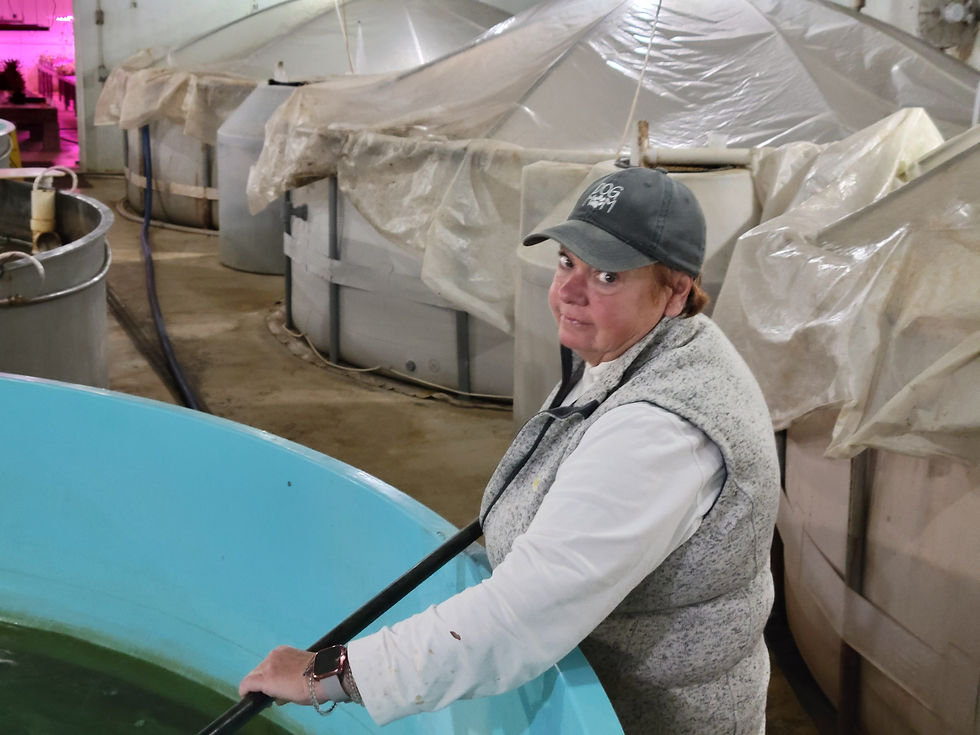
Karlanea busy with farm work
2 of Karlanea's shrimp